
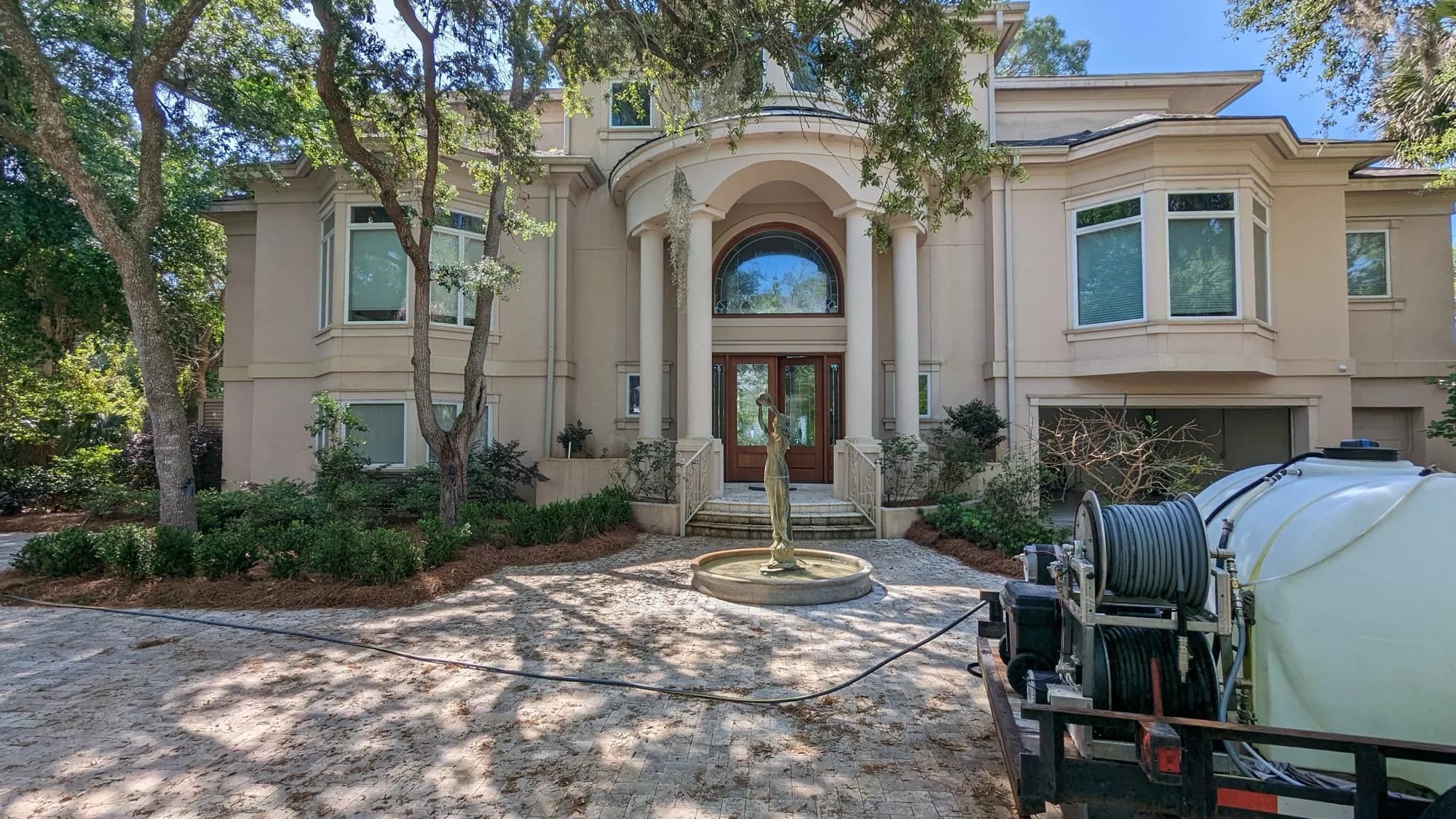
The direct answer: most driveways in Bluffton, Hilton Head, and Beaufort should be professionally cleaned once a year. If your concrete sits in shade, under trees, or stays damp after rain, plan on twice a year. That is not an upsell. That is what our humidity does to concrete.
In a dry climate, concrete gets dirty slowly and mostly just looks dusty. Here, concrete grows things. Algae, mildew, and mold colonize damp surfaces, and the Lowcountry gives them everything they want: warm temperatures, heavy humidity, frequent rain, and shade from the tree canopy everyone loves. The result is a driveway that goes from bright to blotchy gray-green within a single year, sometimes faster.
Why Concrete Gets Dirty So Fast Here
Concrete is porous, which means it holds moisture and gives organic growth a place to anchor. Add the local ingredients and it compounds: spring pollen settles into the pores as food, summer humidity keeps the surface damp overnight, and sprinkler systems hit the same edges every morning. Shade makes it all worse, because the sun is the only free mildew killer we have. A driveway in full sun might stay respectable for a year. The same concrete under live oaks can turn slick and dark in six months.
The Signs Your Driveway Is Due
- Gray, green, or black blotching that does not rinse away with a garden hose
- Dark streaks running from the garage or down the slope after rain
- A slick or slimy feel underfoot in shaded sections when wet
- White haze or rust-colored spots from irrigation water
- You cannot remember the last time it was cleaned, which means it was more than a year ago
That slick film deserves special attention. Algae on wet concrete is genuinely slippery, and driveways are where people carry groceries, kids ride bikes, and guests walk to your door at night. A dirty driveway is an appearance issue. A slick one is a safety issue.
Once a Year vs. Twice a Year
Sunny, open driveways with good drainage: once a year is usually enough, and late spring after pollen season is the sweet spot. Shaded driveways, homes under heavy tree cover, properties backing to lagoons or marsh, and anything near the water where humidity never really drops: twice a year, typically spring and fall. Sidewalks, patios, and pool decks follow the same logic, and they are usually cleaned in the same visit anyway.
Why a Garden Hose and Store Cleaner Do Not Hold the Line
Rinsing moves loose dirt but does nothing about the growth living in the pores. Off-the-shelf concrete cleaners vary, but most are watered down versions of what professionals use, and the typical homeowner application is a quick scrub that kills the surface layer only. That is why a DIY driveway often looks good for a few weeks and then the blotches creep back. A professional driveway and concrete cleaning uses the right solution, even application with a surface cleaner instead of a wand, and a treatment that kills the growth at the root so it stays gone for months, not weekends.
Making It Last Longer Between Cleanings
You cannot change the climate, but you can stack the odds. Trim back branches that keep concrete in permanent shade. Adjust sprinklers that soak the same driveway edges every morning. Blow or sweep leaf litter and pine straw off promptly, because decomposing organic matter stains and feeds mildew. And clean on schedule rather than waiting for it to look terrible, because light, regular cleaning is gentler on the surface than aggressive catch-up work.
Worth noting: the driveway is also the first surface guests and buyers see up close. If you are thinking about selling in the next year or two, keeping the concrete on a regular schedule is one of the cheapest curb appeal moves available, and it pairs naturally with house washing and roof cleaning in a single visit.
One more Lowcountry factor: irrigation. Many neighborhoods here run well or reclaimed water, and the overspray that hits your driveway every morning carries minerals and organic material that feed staining. If your sprinkler arc touches concrete, expect the edges to darken first and plan your cleaning schedule around it.
Not sure which schedule your driveway needs? Call or text Bob at 843-321-9345 for a free quote. We will look at the shade, drainage, and condition of your concrete and give you a straight answer, whether that is once a year or twice.