
The short answer: a Lowcountry screened porch needs a gentle wash at least twice a year, once after spring pollen and once in the fall, using low pressure and a mild cleaning solution. Anything more aggressive risks torn screens, chalky frames, and water damage to whatever is inside.
The screened porch is the whole point of living here. It is also a magnet for everything the Lowcountry air carries. The screens catch pollen in spring, trap humid air against the frames all summer, and collect a sticky salt film if you are anywhere near the water on Hilton Head or the Beaufort riverfront. Left alone for a season or two, frames go chalky, mildew dots the screens, and the floor turns slick with algae in the corners.
What Is Actually Living on Your Porch
Three things, usually at once. First, pollen: that yellow-green film every March and April is not just dust, it is organic material that feeds mold. Second, mildew and algae: anywhere the screens shade the frames, moisture lingers and mildew follows, showing up as gray or black speckling. Third, salt and grime: coastal air deposits a film that makes everything feel slightly sticky and holds dirt against surfaces. Each one needs a slightly different handling, which is why the method matters more than the muscle.
Why You Should Not Blast a Screened Porch
Screens are the most delicate surface on your entire house. A pressure washer at close range will stretch, tear, or pop screen spline right out of the frame. The aluminum frames are softer than they look too, and high pressure can strip their finish and leave permanent wand marks. Then there is everything inside: porch furniture, ceiling fans, outdoor TVs, and the threshold into your house. Spraying hard at a screen is spraying water straight into your living space. This is a low-pressure job, full stop.
The Right Way to Clean It
- Remove or cover furniture, rugs, and electronics before anything gets wet
- Rinse gently from the inside out so debris flows away from the house
- Apply a mild cleaning solution to frames and screens and let it dwell so it kills mildew instead of smearing it
- Rinse at low pressure, top to bottom, keeping the nozzle back from the screens
- Finish with the floor, working toward the door or drain so dirty water never crosses clean concrete
That dwell step is the one everyone skips, and it is the one that matters most. Mildew you can see is the tip of the growth. A proper cleaning solution soaks in and kills it at the root so your porch stays clean for months instead of weeks.
Timing It Around the Lowcountry Seasons
Clean too early in March and the pollen drop re-coats everything you just washed. Wait until late April, after the worst of it, and one good wash carries you through summer. The fall wash, around September or October, clears off a summer's worth of mildew and salt before the holidays when the porch actually gets used again. If your porch sits under oaks or pines, or you are on the water, you may want a light rinse mid-summer too. Shade plus humidity equals fast regrowth.
While You Are at It
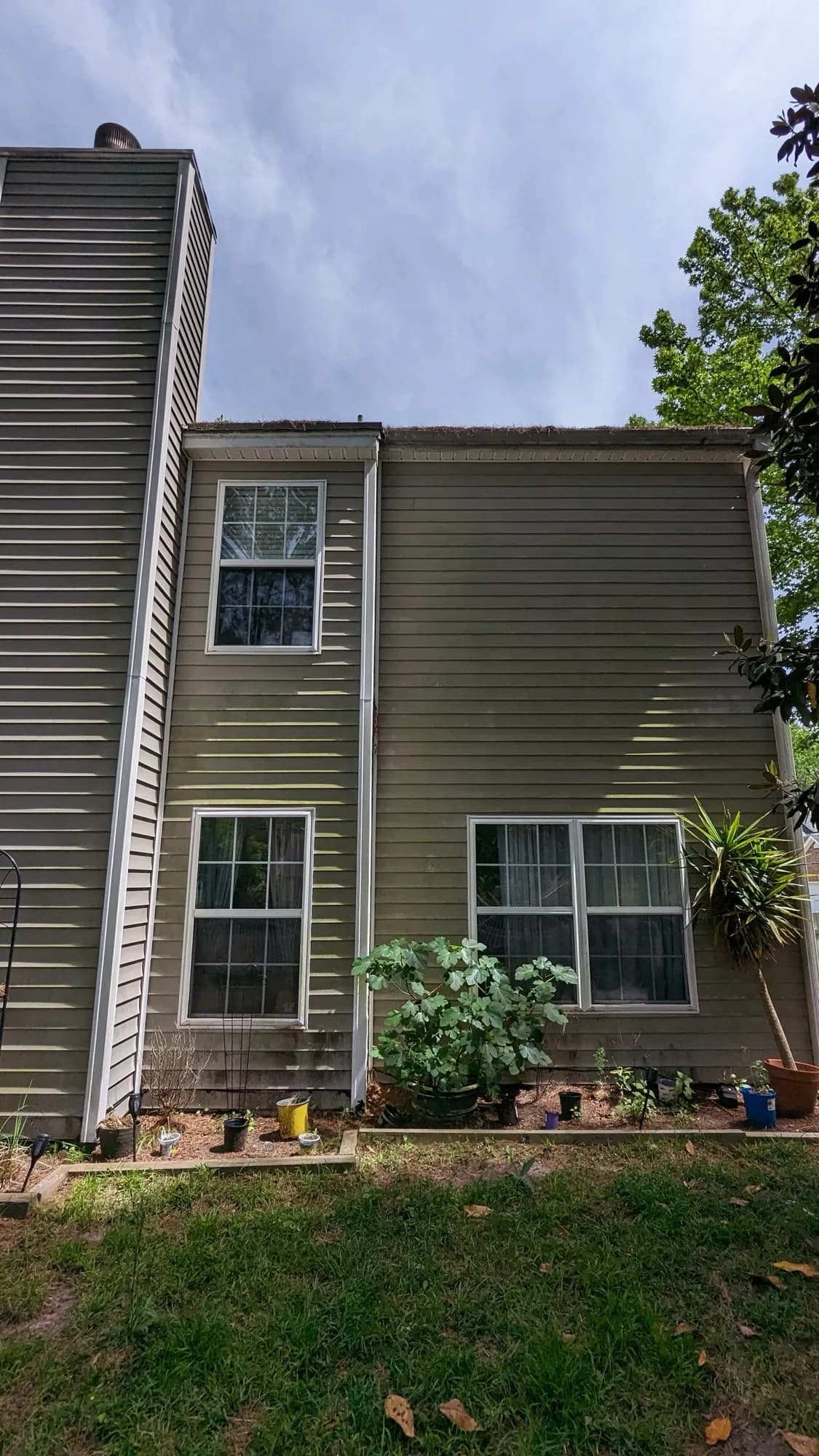
A porch cleaning pairs naturally with house washing, since the same algae that speckles your frames is usually working on the siding behind them. If the porch floor is concrete or pavers, a driveway and concrete cleaning pass finishes the job and gets rid of the slick algae film that makes wet corners dangerous. Bundling it into one visit is the efficient way to do it.
Between professional cleanings, a soft broom and a garden hose go a long way. Sweep pollen and leaf debris off weekly during spring, and hose the floor down after storms so grit does not grind into the finish underfoot. Skip bleach-heavy DIY mixes on aluminum frames, because they can streak and oxidize the finish, and never mix cleaning chemicals. When in doubt, plain water and patience beat an aggressive experiment on the room you sit in every evening.
Your porch should be the cleanest room of the house, not the swampiest. Call or text Bob at 843-321-9345 for a free quote on screened porch cleaning, and we will have it ready for your next evening outside.